If you have a basement with limited headroom, you are not alone. Many homes in Lancaster County and surrounding towns have basements that feel a little tighter, darker, or more closed in than newer builds. The good news is that a low ceiling does not mean the space has to stay unfinished or underused. With the right layout, lighting, and finishing choices, a low basement can still become one of the most comfortable and functional areas in your home.
For homeowners considering low-ceiling basement, the goal is usually the same: Make the basement feel open, useful, and inviting without fighting against the home’s existing structure.
A well-planned basement remodel can turn an awkward lower level into a family room, home office, workout area, media room, playroom, or guest space. We are locally owned and know firsthand how basement finishing can unlock underused square footage and create valuable living areas without the cost of building a full addition.
Can You Finish a Basement with a Low Ceiling?
Yes, in many cases you can. A low-ceiling basement may require smarter design choices, but it can still be finished beautifully. The key is to work with the space instead of trying to force it into something it is not. Clean ceiling lines, thoughtful lighting, lighter finishes, and careful room planning can make a lower ceiling feel much more comfortable than homeowners expect. (Suggested Reading: How to Turn Your Dark Lancaster Basement int a Bright Bonus Room)
What Is the Best Use for a Low-Ceiling Basement?
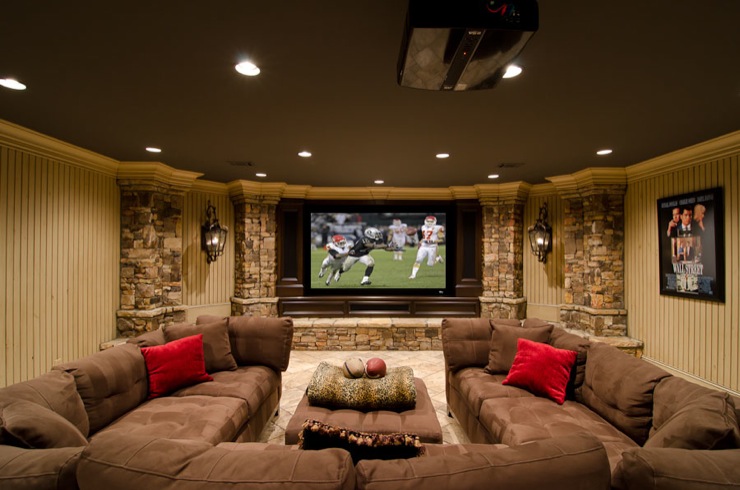
The best use depends on your home and lifestyle, but low-ceiling basements often work especially well for family rooms, TV rooms, home offices, playrooms, hobby spaces, and workout rooms. These types of rooms don’t always need the same sense of vertical openness as a main-floor living area, so they can be a great fit for a basement with limited height.

Why Low-Ceiling Basements Can Still Be Worth Finishing
A basement remodel is often one of the most cost-effective ways to gain more livable space because the basic structure is already there. Shakespeare Home Improvement specifically notes that finishing a basement is usually more budget-friendly than building an addition or moving, while also increasing usable square footage and potentially improving resale value.
That is especially important in older homes across Lancaster County, where families may love their neighborhood but simply need more room. If your basement has a lower ceiling, that does not erase its value. It just means the design needs to be more intentional.
Instead of thinking about what your basement can’t become, it helps to focus on what it can become. A low-ceiling basement can still serve as a cozy retreat, a quiet office, a media room with reduced glare, or a tucked-away place for guests and hobbies. We have years of experience transforming basements into valuable, usable spaces and are happy to offer up ideas!
Smart Design Ideas for Low-Ceiling Basement Finishing
When finishing a basement with limited height, the design approach matters just as much as the construction itself. The goal is to reduce anything that makes the ceiling feel lower and emphasize features that create openness.
Recessed or low-profile lighting is often a better fit than bulky hanging fixtures. Bright, balanced lighting can help the ceiling feel less closed in and prevent the basement from feeling dim.
Open layouts also tend to work better than chopping the basement into too many small rooms. If walls are necessary, keeping the floor plan efficient can help preserve a sense of space.
Lighter paint colors, clean trim details, and flooring that visually stretches the room can also help. Even when the ceiling height can’t change, the room can feel taller simply because it is finished in a way that feels airy and uncluttered.
Storage should be built thoughtfully so it supports the room instead of making it feel boxed in. In a low basement, every design choice should reduce visual heaviness.
Basement Finishing Considerations in Lancaster, Elizabethtown, Lititz, and Manheim
Homes across this part of Lancaster County can vary quite a bit in age, style, and basement layout. That means a one-size-fits-all approach is rarely the right one.
For low-ceiling basement finishing, many nearby homeowners are looking to maximize space in established neighborhoods where expanding outward may not be the easiest or most cost-effective option. No matter what town you’re in, the best results come from designing around the structure you already have instead of forcing a generic basement plan into a home that needs a more customized solution.
Safety and Function Still Matter
Basement finishing is not just about making a space look better. It is also about making it safe, comfortable, and functional for how you intend to use it.
Basement remodeling can also help address common lower-level issues, like moisture concerns, risk of mold growth. (Suggested reading: Top 5 Mistakes Homeowners Make When Remodeling Their Basement in Pennsylvania)
What Does It Cost to Finish a Low-Ceiling Basement?
The cost depends on the size of the basement, the scope of work, the materials you choose, and whether you are adding features like a bathroom, wet bar, or specialized finishes. Local basement finishing projects commonly range from about $20,000 to $50,000, depending on complexity and finish level. See our Basement Cost Guide.
For a low-ceiling basement, the price can vary based on how much customization is needed to make the space feel open and comfortable. In some homes, the design can stay fairly simple. In others, more planning may be needed to work around ductwork, utilities, lighting placement, or layout limitations.
The best way to get real clarity is to evaluate the basement as-is. Get a free consultation today.